
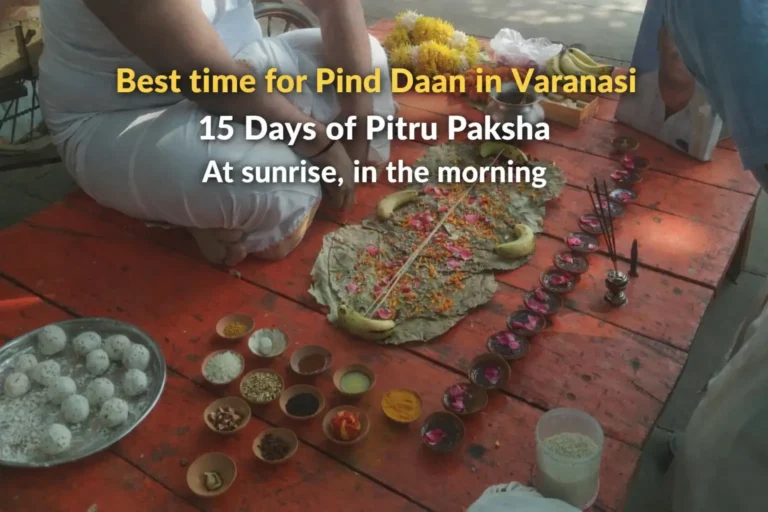
Best time for Pind Daan in Varanasi so that the ceremony can be performed according to tradition and spiritual beliefs.
Pind Daan is a sacred ritual dedicated to ancestors. In this ritual, offerings known as pind are prepared using rice flour, barley flour, sesame seeds, and other sacred materials. These offerings are presented with Vedic mantras while remembering the names of ancestors and their family gotra. According to Hindu traditions, performing this ritual helps provide spiritual peace to departed souls and brings blessings to the family.
If you are planning to visit Varanasi for this ritual, it is often recommended to check a suitable date or shubh muhurat. However, if circumstances do not allow travel during specific dates, the ritual can still be performed according to personal situations and availability.
Spiritual Significance of Pind Daan in Varanasi
Varanasi is believed to be the city of Lord Shiva and is often described as the city of liberation. According to Hindu scriptures, performing ancestral rituals in Kashi carries immense spiritual value. The presence of the holy Ganga River and the ancient ghats creates a powerful spiritual atmosphere for rituals like Pind Daan.
Many ancient texts describe that performing rituals for ancestors in this sacred city helps them attain peace and spiritual liberation. Because of this belief, families from all parts of India and even from abroad travel to Varanasi to perform this ritual.
The sacred environment of the city, the continuous flow of the Ganga, and the centuries-old traditions preserved by priests make the ritual deeply meaningful. When performed with devotion and correct procedures, the ceremony is believed to bring blessings to the family and spiritual peace to the ancestors.
For families planning the ritual, it is helpful to understand the complete procedure and sacred locations. You can also read a detailed guide about the ritual process here: Pind Daan in Varanasi ritual process. Traditional services like Asthi Visarjan Kashi help arrange experienced pandits who guide devotees through every step of the ceremony.
Traditional Meaning of Pind Daan
What is Pind Daan?
Pind Daan is an ancient ritual performed in Hindu tradition to honor ancestors. The word “Pind” refers to symbolic offerings prepared from sacred ingredients, and “Daan” means offering or donation.
During the ritual, these pind offerings are presented to ancestors with prayers and Vedic mantras. The ritual represents gratitude toward previous generations and recognition of the spiritual connection between ancestors and their descendants.
The ceremony is usually performed at sacred places such as riverbanks or pilgrimage sites, and Varanasi is considered one of the most powerful locations for this ritual. Many pilgrims also explore different sacred ghats before performing the ceremony, which you can learn more about here: best place for Pind Daan in Varanasi.
Why is Pind Daan Important?
In Hindu philosophy, remembering and honoring ancestors is considered an important duty of every family. Pind Daan symbolizes respect and gratitude for those who came before us.
It is believed that when ancestors receive these offerings with devotion, they bless the family with prosperity, harmony, and protection. Many families also believe that performing this ritual removes obstacles related to ancestral energies.
Because of these beliefs, people often search for the Best time for Pind Daan in Varanasi before planning their pilgrimage so the ceremony can be performed in the most spiritually beneficial period.
Best time for Pind Daan in Varanasi
Choosing the Best time for Pind Daan in Varanasi depends on religious traditions as well as personal circumstances. Certain periods in the Hindu calendar are considered especially auspicious for performing ancestral rituals.
However, many priests in Varanasi also explain that devotion and sincerity are more important than the exact date. Families who cannot travel during special periods can still perform the ritual according to their situation with proper guidance from experienced pandits.
Pitru Paksha – The Most Auspicious Period
Pitru Paksha is a sixteen-day period dedicated to honoring ancestors. During this time thousands of families travel to sacred places like Varanasi to perform Pind Daan and other rituals.
According to traditional beliefs, ancestral souls are spiritually closer to the earthly world during Pitru Paksha. Because of this, many people consider this period the most powerful and spiritually beneficial time to perform Pind Daan.
Amavasya (New Moon Day)
Another important time for performing ancestral rituals is Amavasya, the new moon day. In Hindu traditions, Amavasya is closely associated with ancestor worship.
Many families choose this day to perform Pind Daan in Varanasi because it is believed that prayers offered on this day reach ancestral souls more effectively.
Death Anniversary (Tithi)
Some families prefer to perform Pind Daan on the death anniversary of their ancestor, which is known as the Tithi. Performing the ritual on this specific date is considered meaningful because it honors the exact day when the ancestor left the physical world.
Performing the Ritual According to Personal Situation
Although certain dates are considered auspicious, many priests explain that Pind Daan can be performed whenever a family is able to visit the holy city. Travel plans, personal circumstances, and family responsibilities may influence the timing.
Professional services like Asthi Visarjan Kashi help families organize the ritual on convenient dates and arrange experienced priests along with proper ritual materials.
Pind Daan Ritual for Seventeen Generations
One unique aspect of the Pind Daan ritual in Varanasi is the remembrance of multiple generations of ancestors. Traditionally, devotees remember up to seventeen generations while performing the ritual.
During the ceremony, the devotee takes the names of ancestors along with the family gotra. This symbolic act represents respect and gratitude toward the entire ancestral lineage.
The priest chants sacred mantras while guiding the devotee through each step of the ritual. This spiritual practice strengthens the connection between present and past generations.
Best Ghats for Performing Pind Daan in Varanasi
Manikarnika Ghat
Manikarnika Ghat is one of the most sacred ghats in Varanasi and is widely known for its deep spiritual significance. Many families choose this ghat for performing ancestral rituals because of its historical and religious importance.
Harishchandra Ghat
Harishchandra Ghat is another important location for performing Pind Daan. According to legends, this ghat is associated with truth, sacrifice, and spiritual purification.
Other Sacred Ghats of the Ganga
Apart from Manikarnika and Harishchandra Ghats, several other ghats along the Ganga River are also used for performing ancestral rituals. The selection of a ghat usually depends on the priest’s guidance and the family’s preference.
Step-by-Step Process of Pind Daan in Varanasi
Sankalp (Sacred Intention)
The ritual begins with Sankalp, where the devotee declares the purpose of the ceremony and remembers the ancestors for whom the ritual is being performed.
Preparation of Pind Offerings
Pind offerings are prepared using sacred ingredients such as rice flour, barley flour, sesame seeds, honey, and ghee. These ingredients symbolize nourishment and respect for ancestral souls.
Offering to Ancestors
The prepared pind are offered with prayers and Vedic mantras. The priest guides the devotee while the names of ancestors and the family gotra are recited during the ceremony.
Tarpan Ritual
Water mixed with sesame seeds is offered to ancestors as part of the Tarpan ritual. This act represents gratitude and remembrance of departed souls.
Final Prayer and Blessings
The ceremony concludes with final prayers seeking peace for ancestors and blessings for the family. Families often consult experienced priests for proper ritual guidance and cost details, which you can read here: Asthi Visarjan pandit charges in Kashi.
Planning Your Visit to Varanasi for Pind Daan
Families planning their pilgrimage should prepare in advance. Since Varanasi receives pilgrims throughout the year, booking the ritual earlier helps ensure a smoother experience.
Planning usually includes selecting a suitable date, confirming a priest, arranging ritual materials, and choosing the appropriate ghat for the ceremony.
For a complete guide to the ritual and preparation, you may also refer again to the detailed article on Pind Daan in Varanasi ritual.
Conclusion
Understanding the Best time for Pind Daan in Varanasi helps families plan their spiritual journey with devotion and clarity. While periods like Pitru Paksha and Amavasya are considered highly auspicious, the ritual can also be performed according to personal circumstances.
The most important aspect of Pind Daan is sincerity, respect for ancestors, and proper guidance from experienced priests. Performing this sacred ritual in the holy city of Varanasi is believed to bring peace to ancestral souls and blessings to future generations.
FAQ – Best Time for Pind Daan in Varanasi
What is Pind Daan in Varanasi?
Pind Daan in Varanasi is a sacred Hindu ritual performed to offer prayers and symbolic food offerings to ancestors. Devotees perform this ritual on the banks of the holy Ganga so that departed souls receive peace and blessings for the family.
Why is Varanasi famous for Pind Daan?
Varanasi is considered the city of Lord Shiva and one of the holiest places for ancestral rituals. Performing Pind Daan at the sacred ghats of the Ganga is believed to help ancestral souls attain spiritual peace and liberation. :contentReference[oaicite:0]{index=0}
What is the best time for Pind Daan in Varanasi?
The best time for Pind Daan in Varanasi is generally during Pitru Paksha, Amavasya, or the death anniversary of the ancestor. However, the ritual can also be performed on other days according to personal circumstances and priest guidance.
What is Pitru Paksha for Pind Daan?
Pitru Paksha is a sacred period of about sixteen days dedicated to honoring ancestors through rituals like Shraddha, Tarpan, and Pind Daan. During this time families perform offerings to express gratitude and seek blessings for peace and prosperity. :contentReference[oaicite:1]{index=1}
Why is Pitru Paksha important for Pind Daan?
Many families consider Pitru Paksha the most powerful time for Pind Daan because ancestral souls are believed to spiritually receive offerings during this period. The final day known as Sarva Pitri Amavasya is especially important for performing these rituals. :contentReference[oaicite:2]{index=2}
Can Pind Daan be done anytime in Varanasi?
Yes, priests in Varanasi explain that Pind Daan can be performed throughout the year. Although special days are considered auspicious, devotion and correct rituals are more important than the exact date.
Which ghat is best for Pind Daan in Varanasi?
Manikarnika Ghat, Harishchandra Ghat, Dashashwamedh Ghat, and Panchganga Ghat are among the most sacred places where families perform Pind Daan rituals in Varanasi. :contentReference[oaicite:3]{index=3}
How long does the Pind Daan ritual take?
The ritual generally takes between one and three hours depending on the number of rituals included such as Sankalp, Pind offering, Tarpan, and final prayers.
What items are used in Pind Daan?
Pind offerings are usually prepared from rice flour, barley flour, sesame seeds, honey, and ghee. These ingredients symbolize nourishment and respect offered to ancestral souls. :contentReference[oaicite:4]{index=4}
Who should perform Pind Daan in the family?
Traditionally the eldest son performs Pind Daan, but any responsible family member can perform the ritual if guided by a priest.
Can NRIs perform Pind Daan in Varanasi?
Yes, many families from abroad visit Varanasi every year to perform Pind Daan for their ancestors with the help of experienced priests.
What is the spiritual benefit of Pind Daan?
According to Hindu belief, Pind Daan provides peace to ancestral souls and brings blessings, prosperity, and protection to the family performing the ritual.
Is there a specific time of day for Pind Daan?
Most Pind Daan rituals are performed in the morning after sunrise at the Ganga ghats, as this time is considered spiritually pure and suitable for rituals.
How many generations are remembered in Pind Daan?
Traditional rituals often include remembrance of several generations of ancestors, sometimes up to seventeen generations depending on priest guidance.
What is Tarpan in Pind Daan?
Tarpan is the offering of water mixed with sesame seeds to ancestors. It is performed along with Pind Daan as a symbol of respect and remembrance.
Can women attend the Pind Daan ceremony?
Yes, women can attend and participate in prayers during the ceremony, although the main ritual is usually performed by a male family member according to tradition.
How much does Pind Daan cost in Varanasi?
The cost of Pind Daan rituals in Varanasi can vary depending on the type of ceremony, priest arrangements, and materials used, often ranging from basic rituals to complete ceremonial packages. :contentReference[oaicite:5]{index=5}
Why do people travel to Varanasi for ancestral rituals?
Varanasi is believed to provide spiritual liberation and peace to ancestral souls. Because of this belief, thousands of families travel here every year to perform rituals like Pind Daan and Shraddha.
Can Pind Daan remove ancestral problems?
Many devotees believe that performing Pind Daan helps resolve ancestral disturbances or Pitru Dosha and brings harmony and positive energy to the family.
Where can I learn more about Pitru Paksha?
If you want to understand the religious background of the ancestral ritual period, you can read about it in detail here: Pitru Paksha and its significance in Hindu tradition.

