
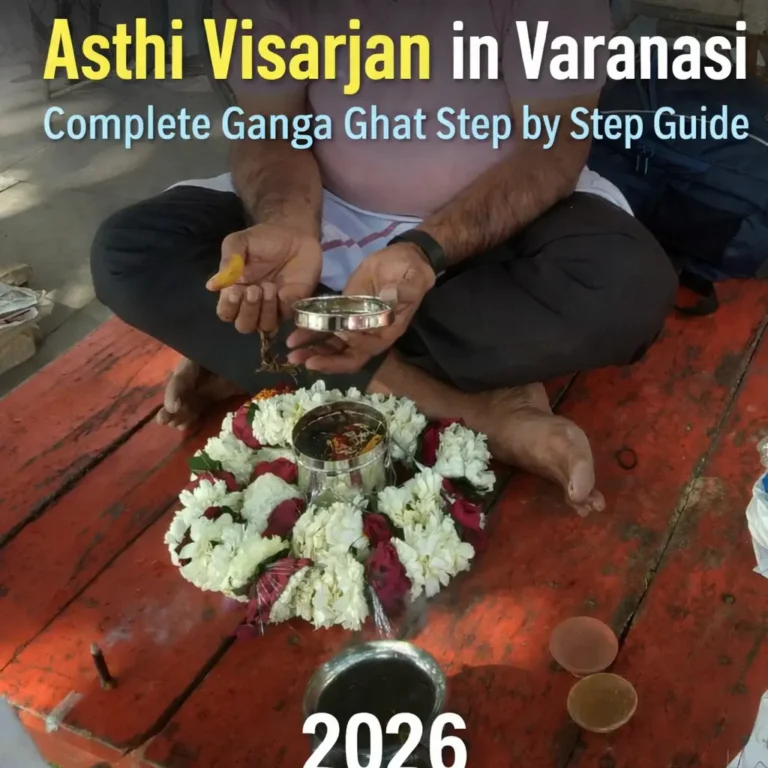
Asthi Visarjan in Varanasi Complete Ganga Ghat Step by Step Guide 2026 Asthi Visarjan is a sacred ritual for Hindus where they immerse the ashes of the deceased in the holy river Ganga for the soul’s peace and attainment of Moksha. In 2026, many people are planning a trip to Varanasi as it is considered the gateway to Moksha and is closely related to Lord Shiva. This ritual is usually initiated with purification and Sankalp done under the guidance of learned Kashi Pandits at the Ganga Ghat. Then, the asthi (ashes) is immersed in the holy river with the chanting of Vedic mantras. Some people even opt for Pind Daan and Tarpan along with it for the soul’s attainment of Moksha. Some of the major ghats where people opt for this ritual are Dashashwamedh Ghat and Manikarnika Ghat. Performing Asthi Visarjan in Varanasi is a way of ensuring that it is done according to traditional Vedic rituals and gives spiritual satisfaction to the family.
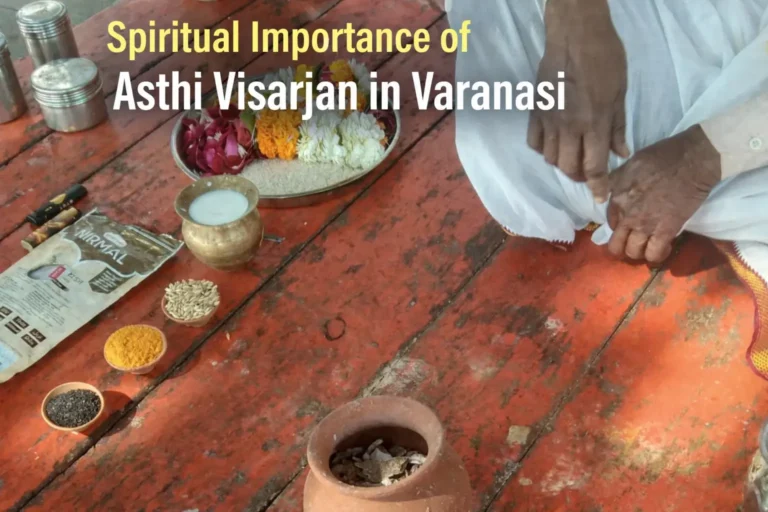
Spiritual Importance of Asthi Visarjan in Varanasi
Varanasi is considered one of the holiest cities for the Hindu religion. According to ancient scriptures, Lord Shiva protects this city, and any rituals performed here are considered spiritually powerful.
The Ganga River in Varanasi is considered sacred and is believed to purify any sins and lead souls towards salvation. Immersing ashes in the river at Varanasi is considered very auspicious. It is considered true that when the ashes of a departed soul are immersed with proper rituals and traditions, the soul reaches peace and salvation.
Another reason for considering Varanasi a spiritually important location is its ancient ghats. These ghats have been present for thousands of years and have been utilized for various rituals. For families who wish to perform Asthi Visarjan, there is a spiritual connection with tradition, faith, and ancestors.
The presence of Kashi Pandits is also very important for the spiritual significance of Varanasi. These pandits have performed thousands of rituals and know the exact process of Asthi Visarjan according to Vedas.
Preparation Before Coming to Varanasi for Asthi Visarjan
Before the families proceed to Varanasi, they prepare the necessary items that need to be brought along with them to complete the ritual process. The ashes collected after the cremation process are kept safe in an urn or cloth bag. The collected ashes need to be transported to Varanasi to be immersed in the Ganga River.
Families need to contact local priests before their visit to Varanasi, so the ritual process can be conducted smoothly after their arrival. This will help the families avoid confusion and ensure that all the necessary arrangements are made before the ritual process.
Families need to be prepared with the basic items that need to be brought along with them to complete the ritual process, such as flowers, incense, etc. However, this is not the case, as local priests will arrange the necessary items needed to complete the puja process.
Families need to prepare the suitable day to complete the ritual process, but the process can be conducted on most days, apart from the Amavasya and other auspicious days in the Hindu calendar.
This will help the families complete the ritual process peacefully without any complications, thus providing solace to the families who have lost their loved ones.
Major Ganga Ghats for Asthi Visarjan in Varanasi
Varanasi, one of the oldest living cities in the world, is situated on the sacred banks of the River Ganga. The city has more than eighty ghats stretching along the river, each with its own religious history and spiritual significance. However, when it comes to Asthi Visarjan (the immersion of cremation ashes), only a few ghats are traditionally preferred because they are considered highly sacred and are well-known for performing ancestral rituals.
Dashashwamedh Ghat
Dashashwamedh Ghat is one of the most famous and spiritually vibrant ghats in Varanasi. Located near the sacred Kashi Vishwanath Temple, this ghat attracts thousands of pilgrims every day. According to Hindu belief, Lord Brahma performed ten Ashwamedha Yajnas at this place, which is why the ghat is known as Dashashwamedh.
Because of its central location and strong spiritual atmosphere, many families choose this ghat to perform Asthi Visarjan rituals. Local priests are easily available to guide families through the proper Vedic procedures. The sacred flow of the Ganga and the powerful spiritual environment make this ghat an important place for ancestral rituals.
Manikarnika Ghat
Manikarnika Ghat is considered the holiest cremation ghat in Varanasi and holds deep religious importance in Hindu tradition. It is believed that Lord Vishnu created the sacred Manikarnika Kund here and Lord Shiva grants liberation to souls whose last rites are performed at this sacred place.
For centuries, this ghat has been the main cremation ground of Varanasi where funeral rituals are performed continuously. Many families believe that immersing ashes near Manikarnika Ghat helps the departed soul move toward moksha. Because of this belief, Asthi Visarjan performed here is considered extremely sacred.
Harishchandra Ghat
Harishchandra Ghat is another important cremation ghat in Varanasi. It is connected with the legendary King Harishchandra, who is remembered for his truthfulness and sacrifice. According to mythology, he once worked at this cremation ground to keep his promise of honesty.
Today, Harishchandra Ghat remains an active place for funeral rites and Asthi Visarjan ceremonies. Many families choose this ghat because of its calm spiritual environment and historical significance. Experienced priests help families perform the rituals according to traditional Vedic methods.
Although each ghat has its own historical and spiritual importance, the basic rituals of Asthi Visarjan remain similar everywhere. Families offer prayers, flowers, and sacred Ganga water before immersing the ashes into the holy river, praying for peace and liberation for the departed soul.
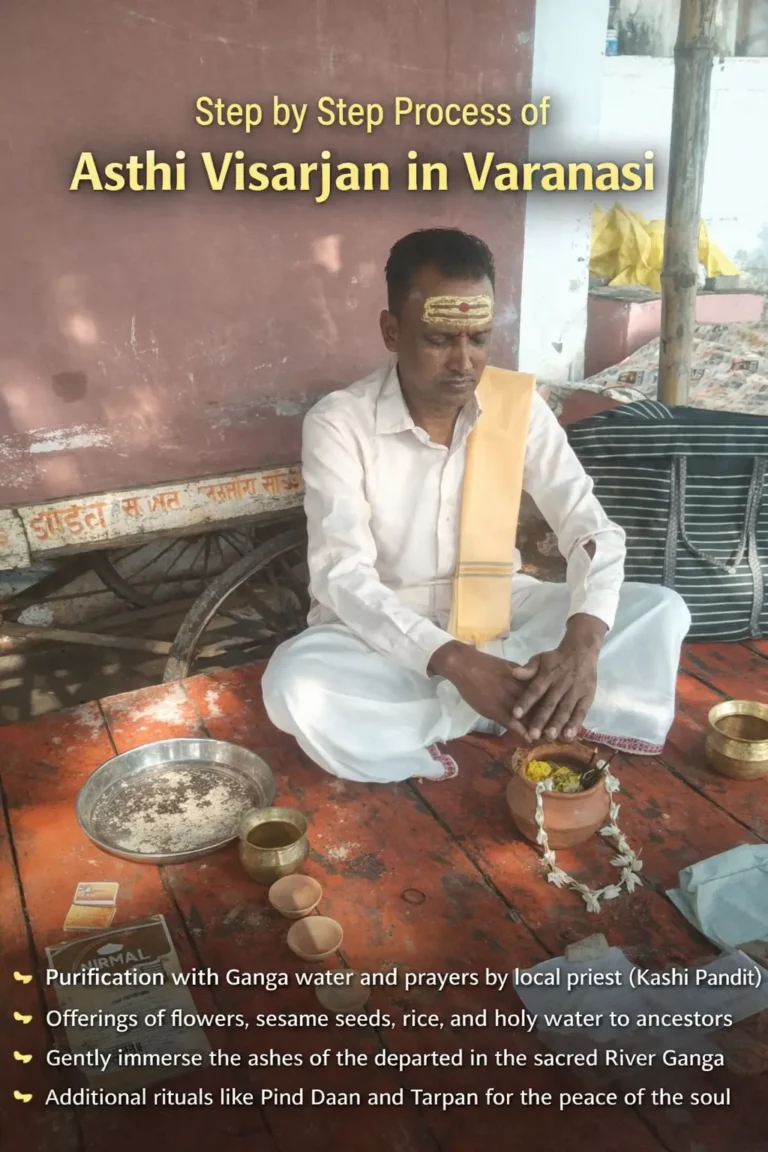
Step by Step Process of Asthi Visarjan in Varanasi
The Asthi Visarjan ceremony in Varanasi is performed according to ancient Vedic traditions and religious customs that have been followed for centuries. This sacred ritual is conducted on the banks of the holy River Ganga, which is believed to purify the soul and help the departed attain spiritual peace. Families visiting Varanasi usually perform this ceremony with the guidance of experienced Kashi Pandits, who understand the traditional procedures and ensure that every step of the ritual is performed correctly.
The process generally begins with a purification ritual at the Ganga Ghat. The family members take a small amount of Ganga water and sprinkle it on themselves and the ritual items to purify the surroundings. The ashes of the departed person, known as asthi, are usually brought in an earthen pot or a sacred container. Before the immersion, prayers and mantras are recited by the priest to invoke divine blessings and seek peace for the departed soul.
Preparation Before the Ritual
Before the ceremony begins, families gather the ashes of the departed and reach the selected ghat along the sacred Ganga River. The priest prepares the ritual area and arranges the necessary puja materials so the ceremony can be performed smoothly and respectfully.
Step 1 – Arrival at the Ganga Ghat
The ritual begins when the family arrives at the chosen ghat with the ashes of the departed soul. The priest welcomes the family and prepares a sacred place near the riverbank for performing the ceremony.
Step 2 – Sankalp (Ritual Intention)
The priest asks the main family member performing the ritual to take a Sankalp. In this step, the name of the departed person and the family lineage are mentioned while praying for peace and spiritual progress of the soul.
Step 3 – Purification Ritual
Family members sprinkle Ganga water and perform purification rituals. This step symbolizes spiritual cleansing and prepares everyone for the sacred ceremony.
Step 4 – Puja and Mantra Chanting
The priest performs a short puja and chants Vedic mantras. These sacred chants invoke blessings from divine energies and create a spiritually pure atmosphere for the ritual.
Step 5 – Immersion of Ashes in the Ganga
The ashes are respectfully immersed into the flowing waters of the Ganga while prayers are offered for the peace of the departed soul.
Step 6 – Tarpan Ritual
After the immersion of ashes, the Tarpan ritual is performed. Water mixed with sesame seeds is offered to ancestors while prayers are recited for their blessings.
Step 7 – Pind Daan
Optional but Spiritually Recommended
Many families also perform Pind Daan along with Asthi Visarjan. In this ritual, symbolic offerings made from rice and barley are offered to ancestors to support the soul’s spiritual journey.
Step 8 – Final Blessings
After completing all rituals, the priest offers final prayers and blessings for the family. Gratitude is expressed toward the sacred Ganga River and prayers are offered for the peace of the departed soul.
Role of Local Kashi Pandits in Asthi Visarjan
Local priests in Varanasi guide families throughout the ceremony. Their knowledge of Vedic scriptures ensures that every step of the ritual is performed correctly according to tradition.
Best Time to Perform Asthi Visarjan in 2026
Asthi Visarjan can usually be performed on any suitable day after cremation. However, some families prefer spiritually significant dates like Amavasya or during the Pitru Paksha period.
Varanasi has more than eighty ghats along the Ganga River. You can read more about these sacred locations here: Ghats in Varanasi.
Conclusion
Asthi Visarjan in Varanasi is a deeply meaningful spiritual ritual that allows families to honor their ancestors and pray for the peace of the departed soul.
Families often arrange rituals through online Asthi Visarjan and Pind Daan services in Varanasi so that the ceremony becomes simple and organized when they arrive at the ghats.